ce jardin qui m’habite
Centre d’art Rozynski, du 20 juin au 2 juillet 2025
Artistes : Maude Arès, Richard Ibghy & Marilou Lemmens, Julie Lavoie, Annie France Leclerc, Clara Lou Micheau, Amélie Proulx
Il y a des jardins qui débordent. Des jardins sans clôture ni cadre ; qui sortent du rang, se répandent, s’enchevêtrent. Qui forment des lieux de passage et d’enracinement où se croisent les trajectoires de plantes, d’animaux, de pierres et d’humain·es.
Derrière le Centre d’art Rozynski, la terre porte encore la mémoire de Wanda Rozynska, fondatrice de l’école de poterie qui a longtemps animé ces lieux de foisonnement. Chaque été, elle accueillait des cohortes d’étudiant·es venu·es y apprendre les arts céramiques. Elle leur enseignait dans une approche holistique alliant la création à l’entretien du potager, aux marches dans le sentier longeant la rivière, aux séances de yoga parmi les fleurs, aux repas partagés dans la cuisine. Les jardins nourrissaient, inspiraient, rassemblaient. Devenus une forme de prolongement de l’atelier, Wanda y passait des heures à dessiner les plantes, les identifier, imaginer des vases pour les accueillir et en répéter les motifs sur ses pièces de céramique. Ces jardins, qu’elle a soigneusement plantés et entretenus, demeurent vivants à travers les gestes de celleux qui continuent d’en prendre soin aujourd’hui.
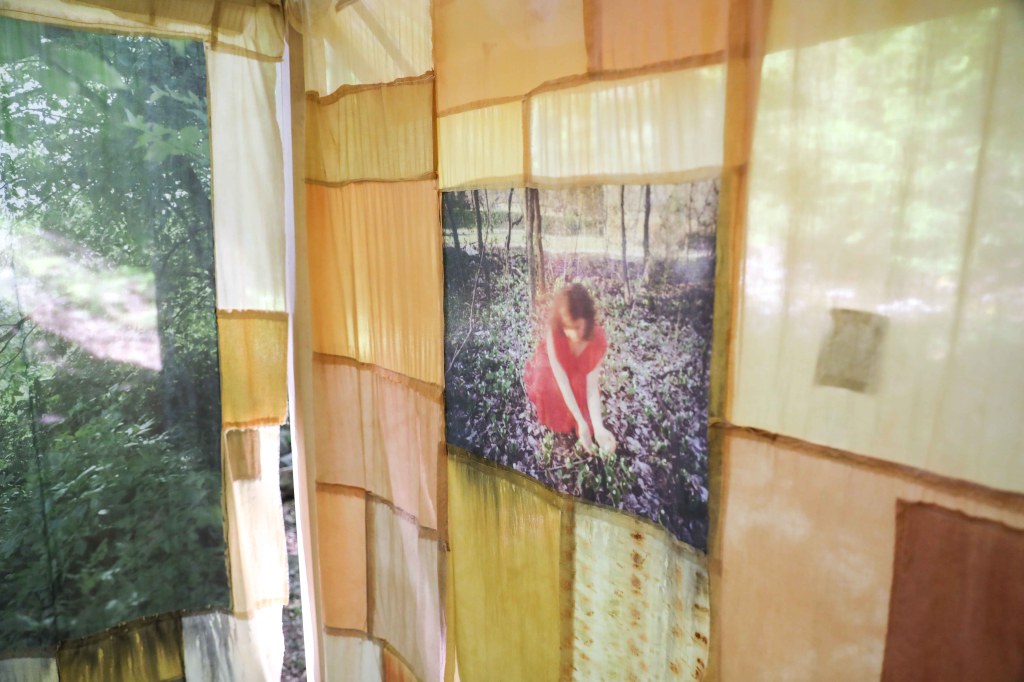
ce jardin qui m’habite émerge de cette porosité entre espace intérieur et habitat partagé. Le long des sentiers, des œuvres évoquent les cycles du vivant, la décomposition et la renaissance. Certaines se concentrent sur ce qui grouille à la surface, sur les interactions souterraines et la régénération des sols ; d’autres prolongent le paysage jusque dans la rivière. Des œuvres de cabanes et de bassins révèlent les architectures du jardin. Elles tournent notre attention vers les oiseaux qui s’y pavanent et les grenouilles qui y coassent, vers les pierres qui s’y cachent et les secrets qu’elles recèlent.
Ici, le jardin est à la fois refuge et espace d’échange ; un petit bout de territoire qui échappe aux bordures, qui nous habite autant que nous l’habitons. Il s’inscrit dans la durée, traverse les corps et les saisons, s’étend jusque dans la maison. Il n’est pas pensé pour être maîtrisé, mais pour qu’on s’y attarde et qu’on y respire autrement.
À fleur de terre, le jardin se fait monde. Quelque chose s’y déploie : une invitation à ralentir, à prêter attention. À remarquer ce qui pousse, ce qui rampe, ce qui veille. À reconnaître que toute floraison est partagée et à imaginer d’autres formes de cohabitation.
Some gardens overflow. Gardens without fences or frames; unruly, sprawling, entangled. They become places of passage and rootedness, where the paths of plants, animals, stones, and humans intersect.
Behind the Rozynski Art Center, the land still carries the memory of Wanda Rozynska, founder of the pottery school that once animated these grounds. Every summer, she welcomed cohorts of students coming to learn the ceramic arts. Her teaching embraced a holistic approach, weaving together making with tending the vegetable garden, walking along the river path, doing yoga among the flowers, and sharing meals in the kitchen. The gardens nourished, inspired, gathered. They became an extension of the studio, a place where Wanda spent hours sketching plants, identifying them, imagining vases to hold them, and repeating their motifs on her ceramic pieces. These gardens, which she thoughtfully planted and tended, remain alive through the gestures of those who continue to care for them today.
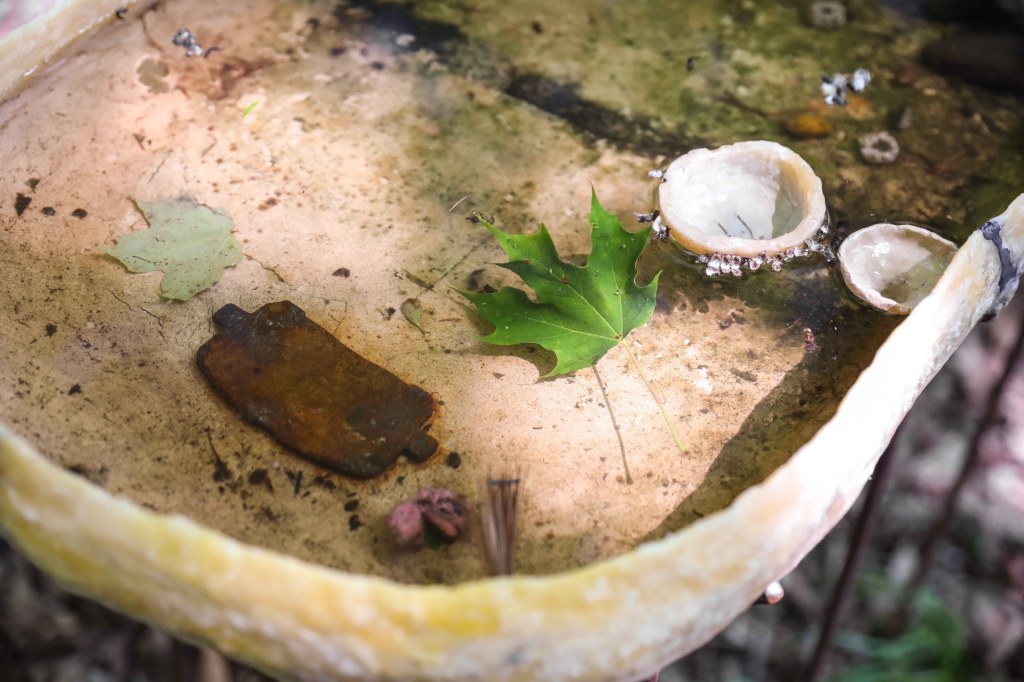
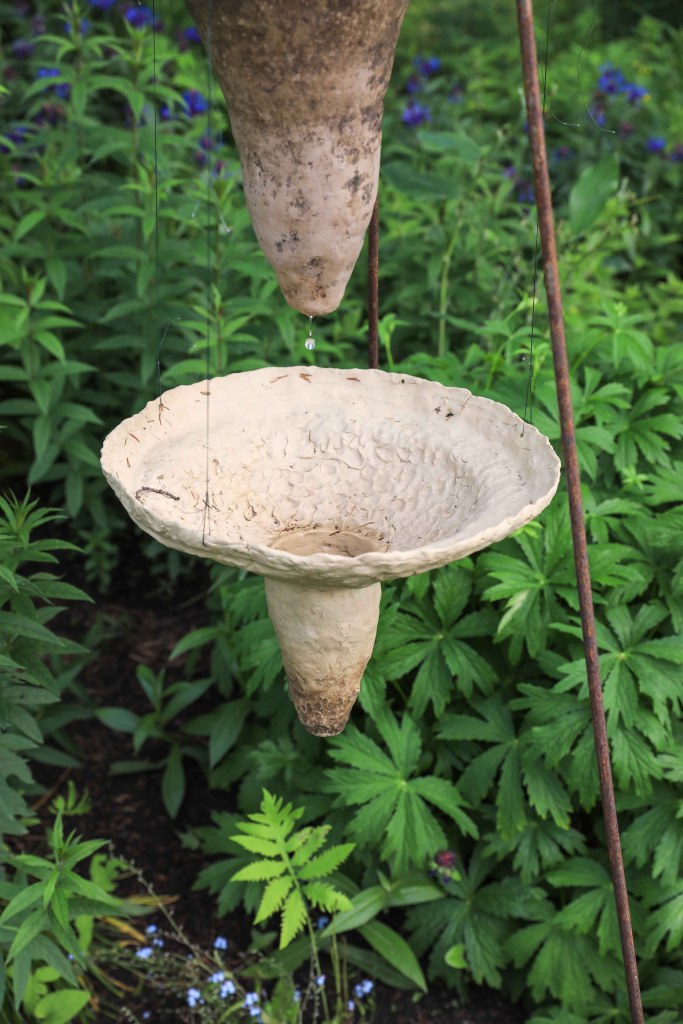
ce jardin qui m’habite emerges from this porosity between inner space and shared habitat. Along the pathways, the works evoke cycles of life, decay, and renewal. Some focus on what swarms across the surface, on underground interactions and the regeneration of soil; others extend the landscape into the river. Works of sheds, shacks and basins reveal the architectures of the garden. They draw our attention to the birds parading through it and the frogs croaking in its pools, to the stones hiding within it and the secrets they hold.
Here, the garden acts both as a refuge and a space of exchange; a small patch of land that escapes its boundaries, that lives within us as much as we inhabit it. It unfolds over time, moves through bodies and seasons, stretches into the home. It is not meant to be controlled, but lingered in, breathed in differently.
At the surface of the earth, the garden becomes a world in itself. Something unfurls there: an invitation to slow down, to pay attention. To notice what grows, what crawls, what watches over. To recognize that « all flourishing is mutual »,1 and to imagine new ways of existing together.
1. Robin Wall Kimmerer, « The Serviceberry
An Economy of Abundance« , Emergence Magazine, October 26, 2022.
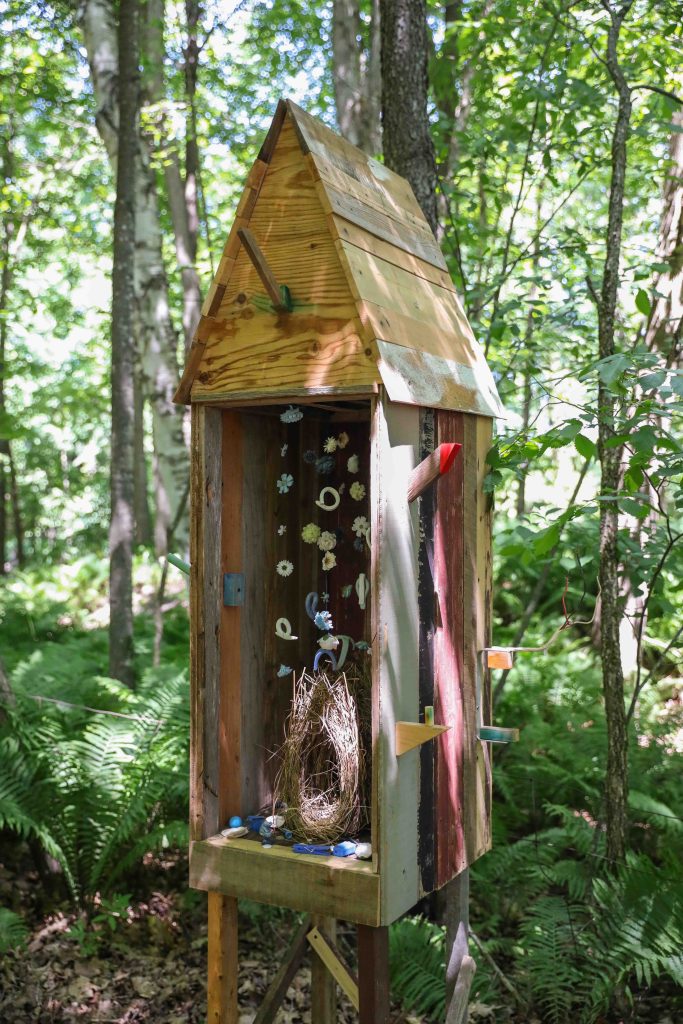

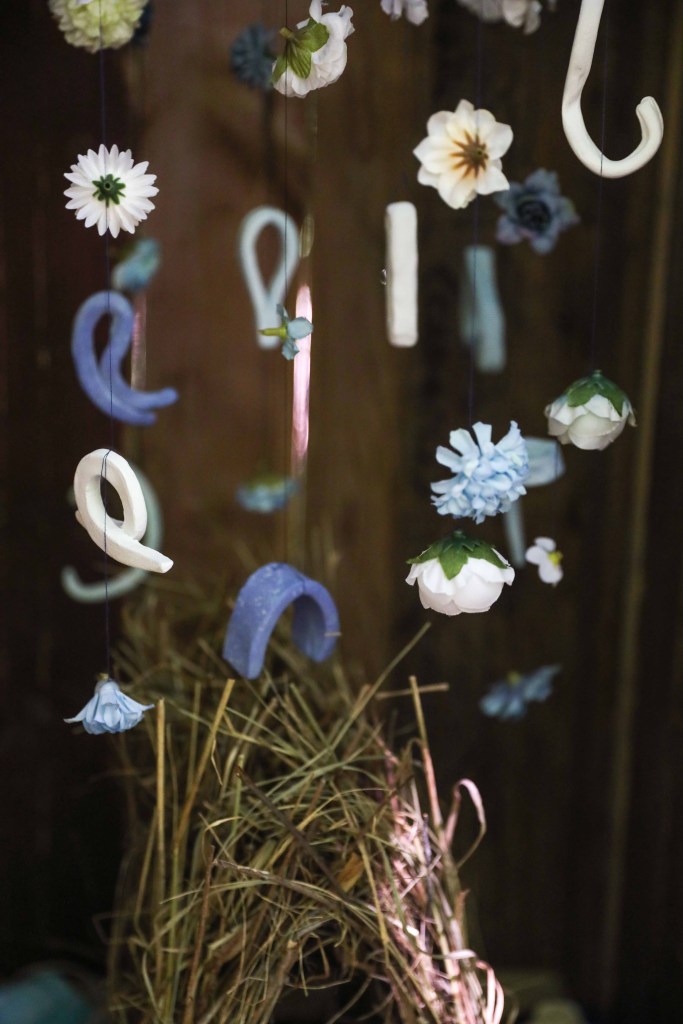
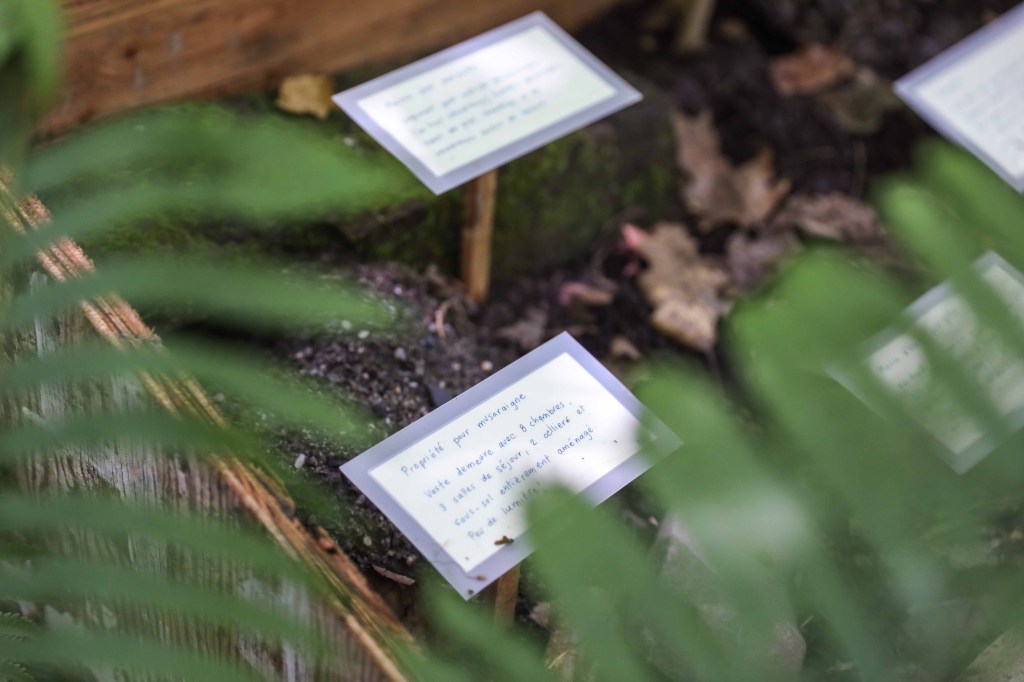
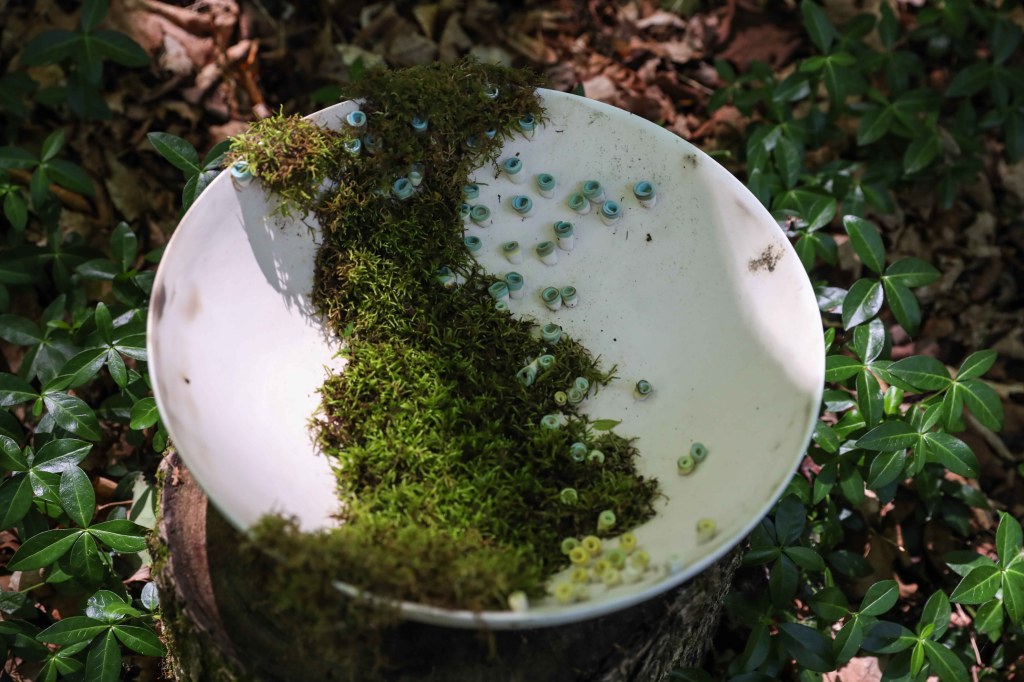
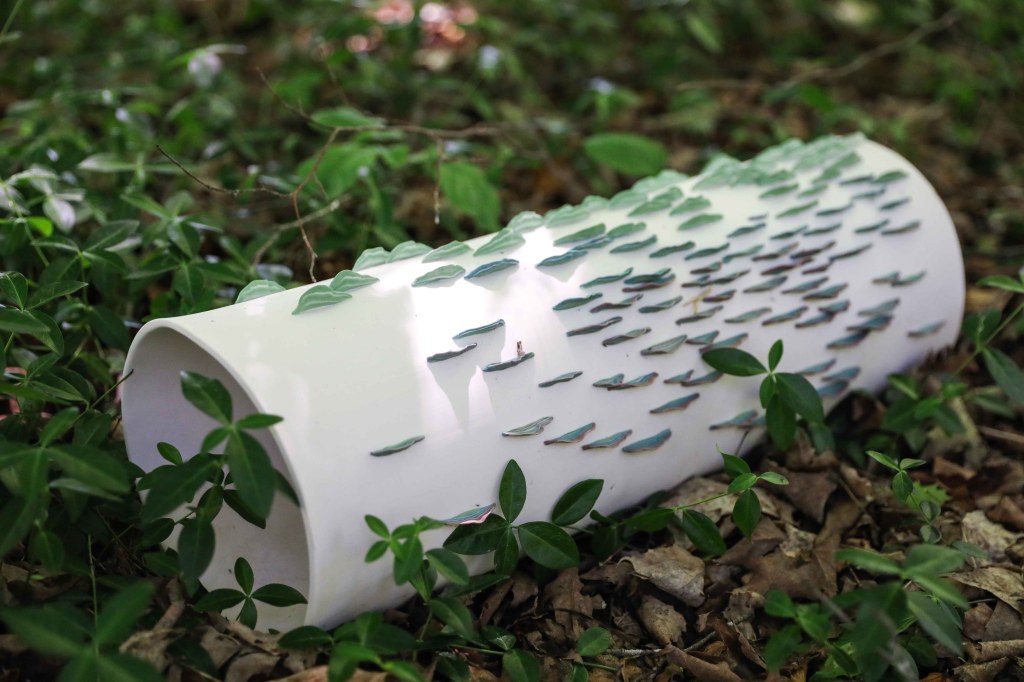
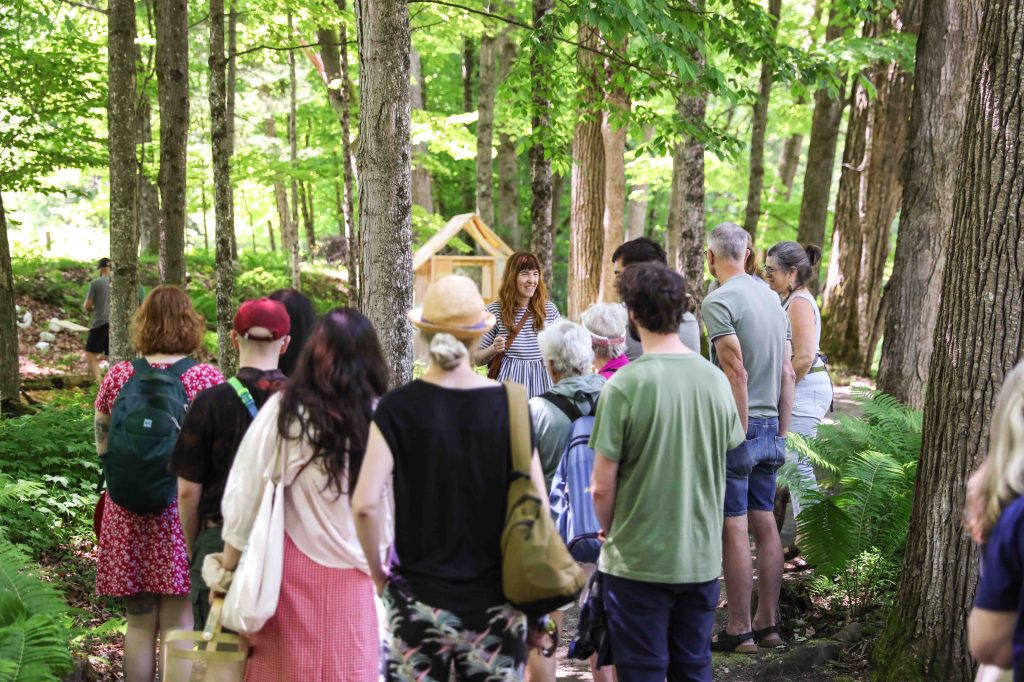

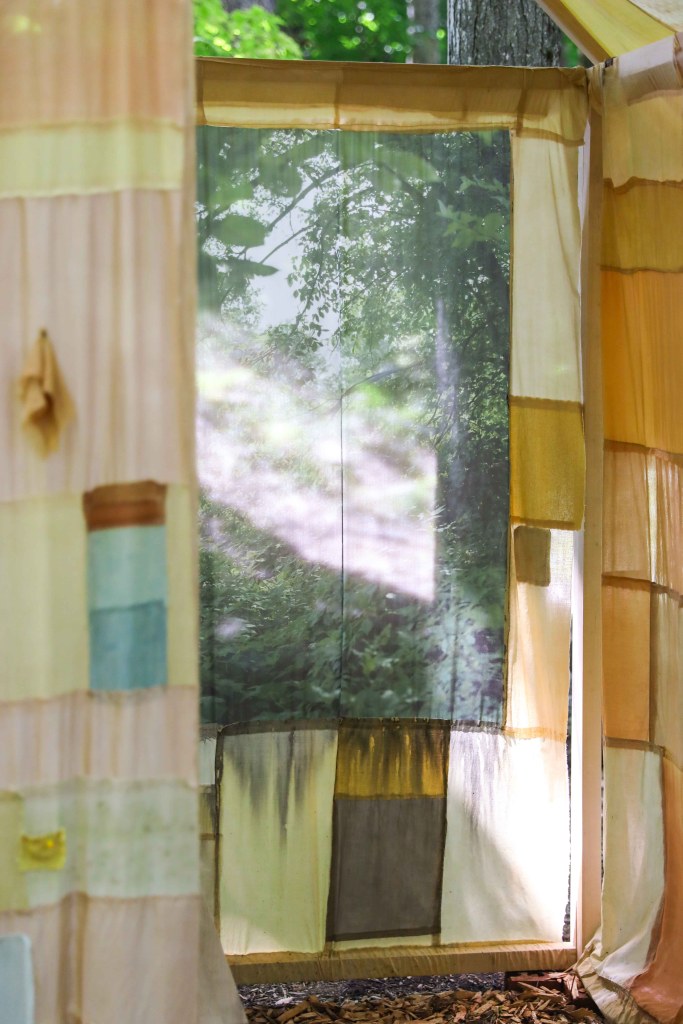
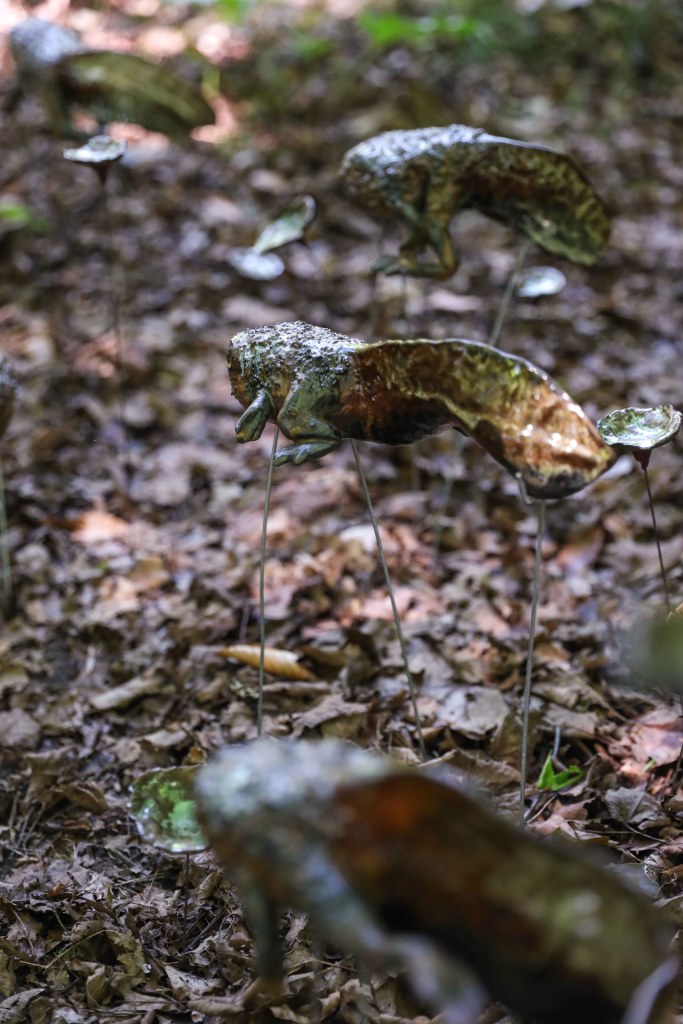
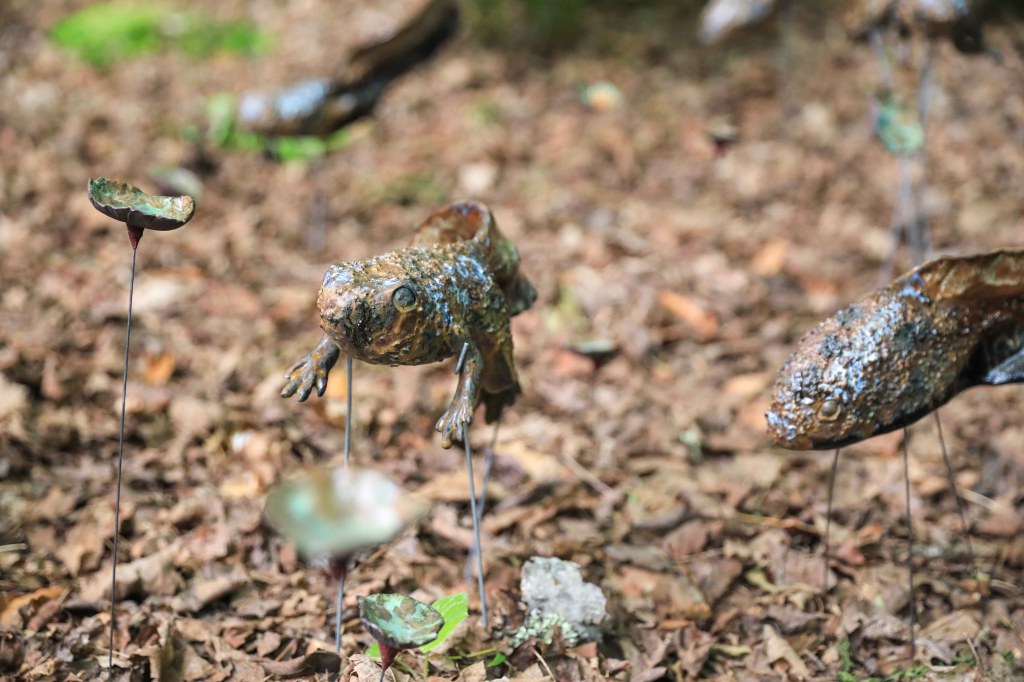
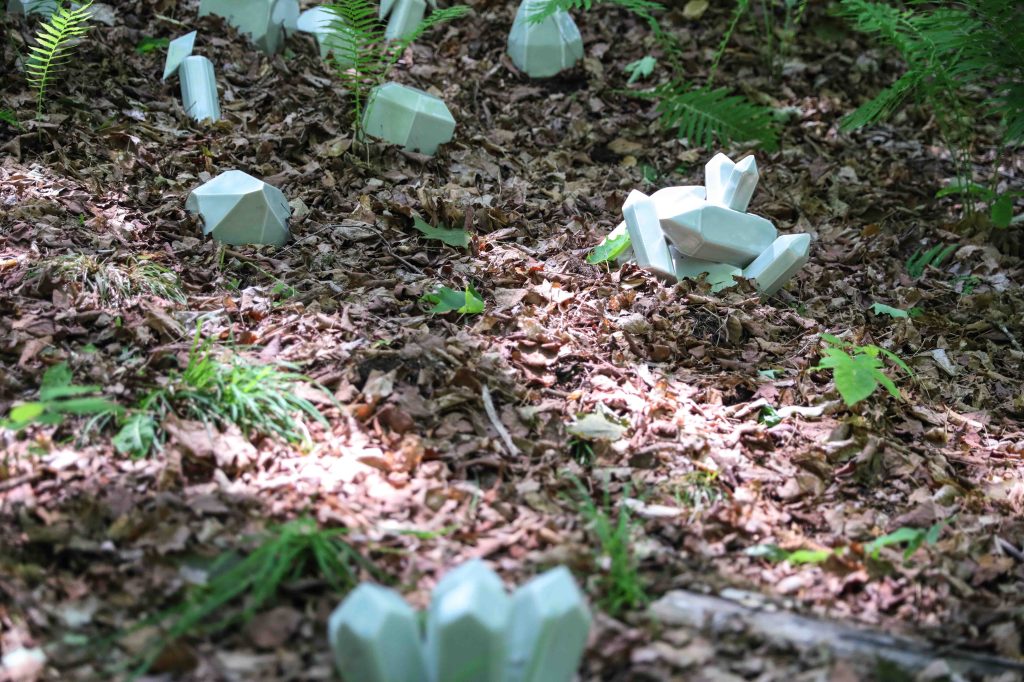
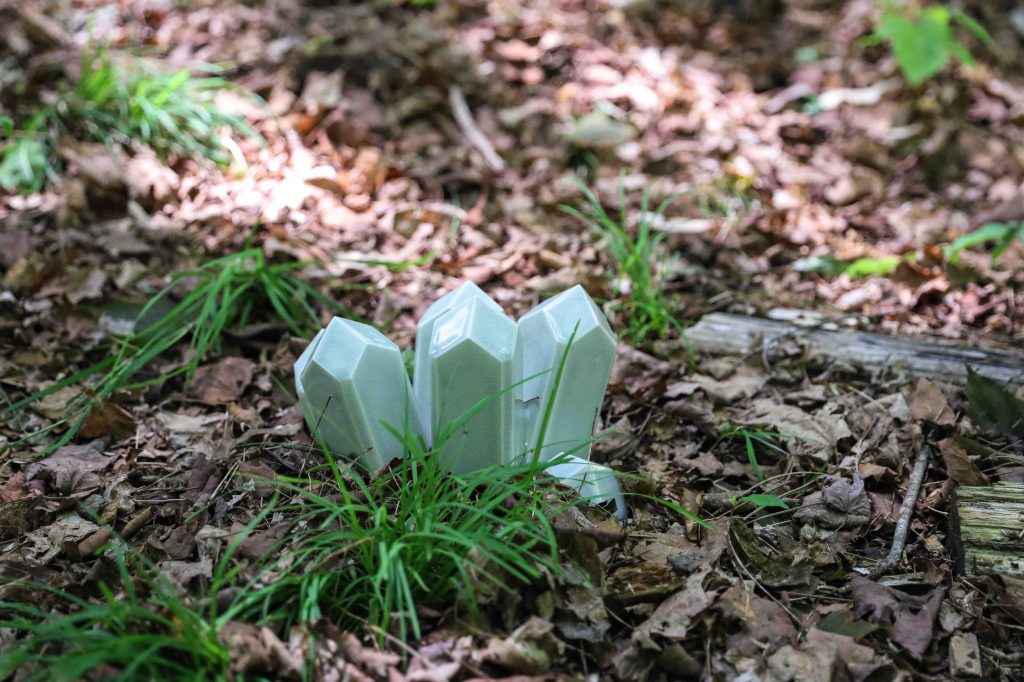
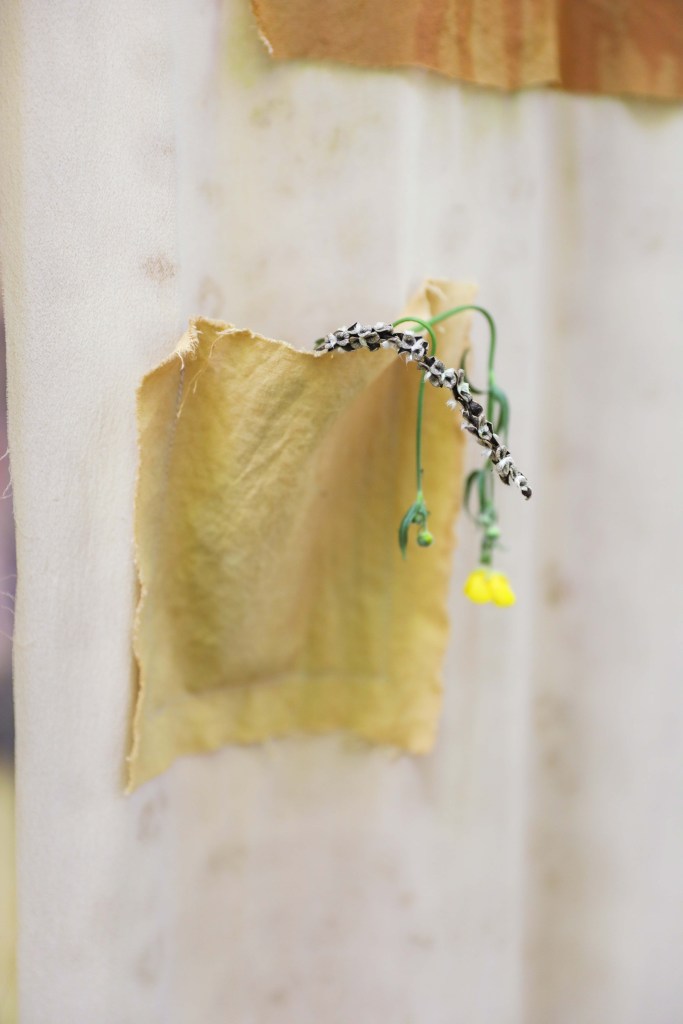
Images : Vues de l’exposition ce jardin qui m’habite, Centre d’art Rozynski, sentier au bord de la rivière / Exhibition views ce jardin qui m’habite, Rozynski Art Center, path by the river, 2025. Photos : Noémie Sylvestre
Design graphique de Dominique Rivard / Graphic design by Dominique Rivard
 noémie fortin