
À TABLE – faire territoire
RURART, art contemporain en milieu rural, 21 septembre 2024
Résidences et évènement à RURART, art contemporain en milieu rural
Artistes : Maude Arès, Douglas Scholes, Karine Gaulin, Horizon Factory, Soleil Launière et Jessica Slipp
Intervenant·es : Valérie Archambault (Miels Liaison), Michel Durand Nolett (porteur de savoirs w8banaki), Francine Lemay (agricultrice propriétaire de la Ferme La Généreuse)
Médiatrices culturelles : Marilyn Leduc et Caroline Chantefort
RURART →
Revue de presse
Article de Jean-Marc Brais dans le Journal Régional Le Haut-Saint-François →
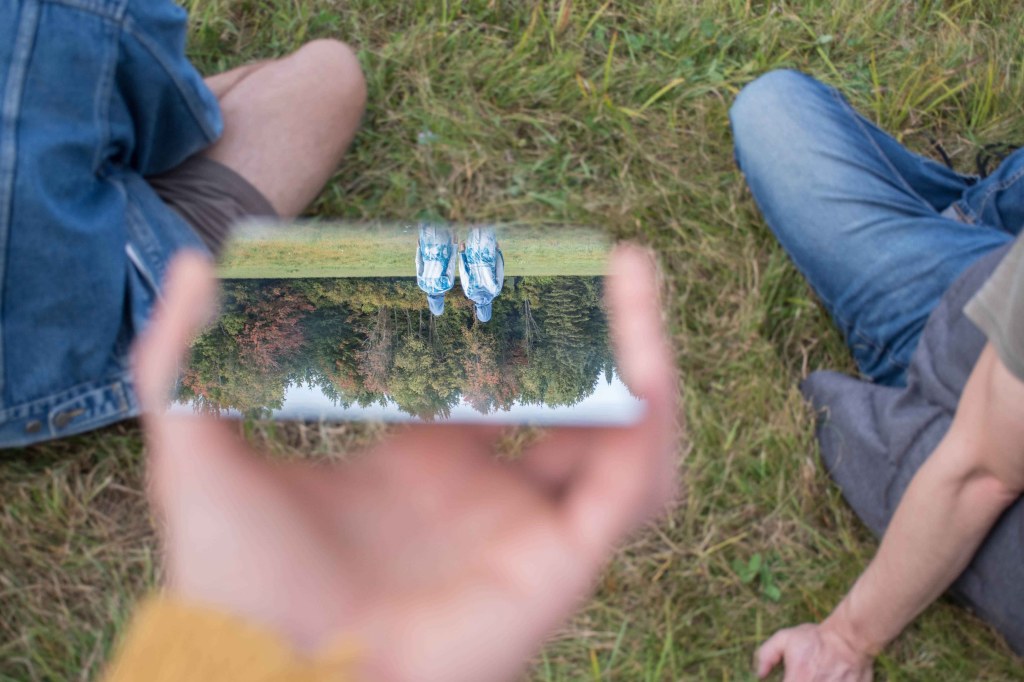
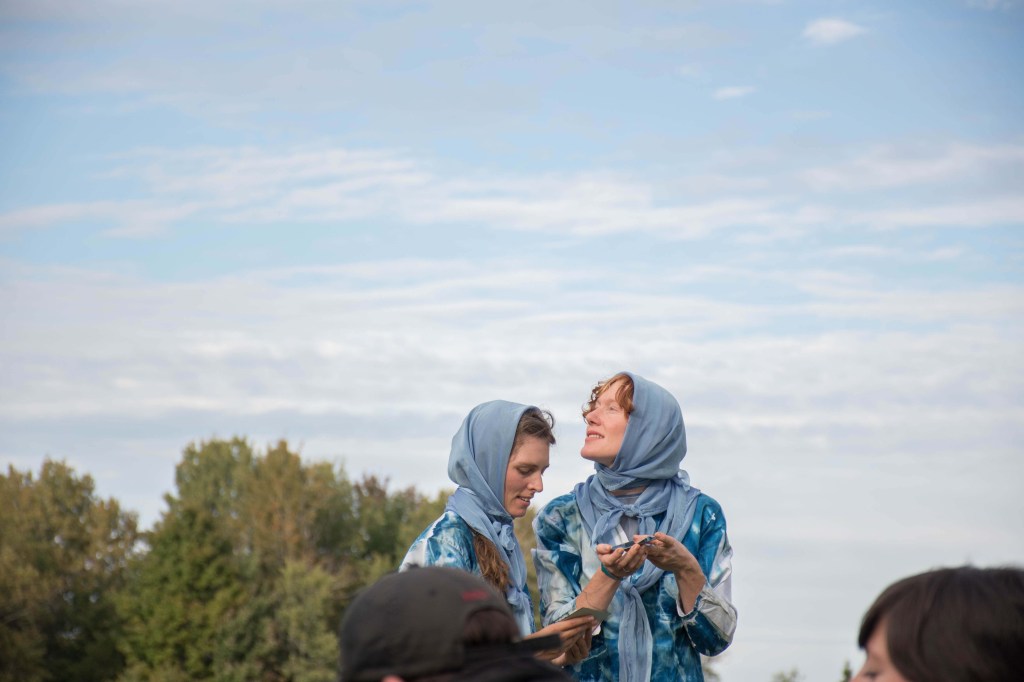
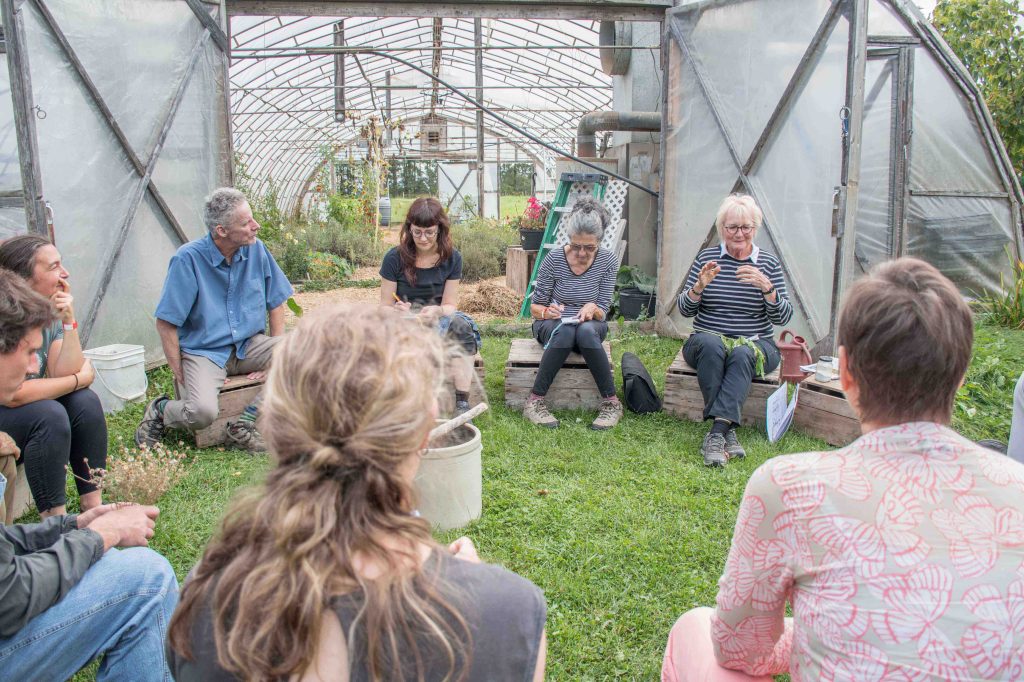
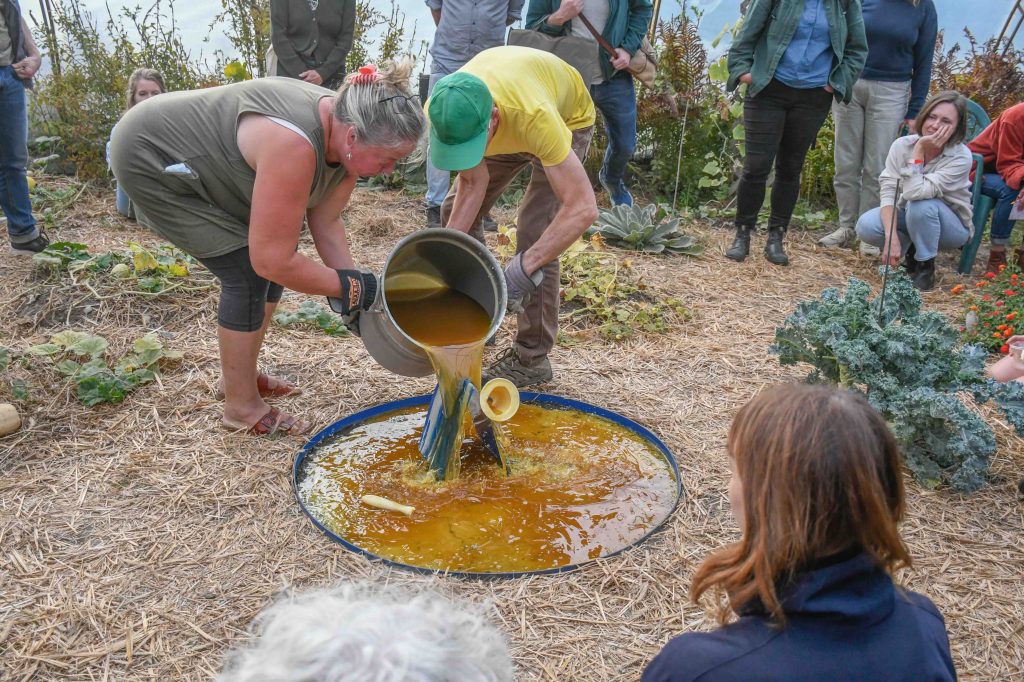
Conçue comme le point central de la programmation annuelle de RURART, la série d’évènements À TABLE allie la recherche, la diffusion et la médiation autour de sujets relatifs à l’art, l’écologie et l’agriculture. Tenus en extérieur, dans les installations de la ferme, ceux-ci prennent la forme d’une grande tablée où des intervenant·es provenant des milieux artistiques, agricoles et de la recherche se rassemblent autour d’un thème commun. Au partage d’idées s’ajoutent des ateliers agricoles et de création, des installations et performances artistiques, ainsi qu’un goûter de saison mettant en vedette des produits agricoles locaux.
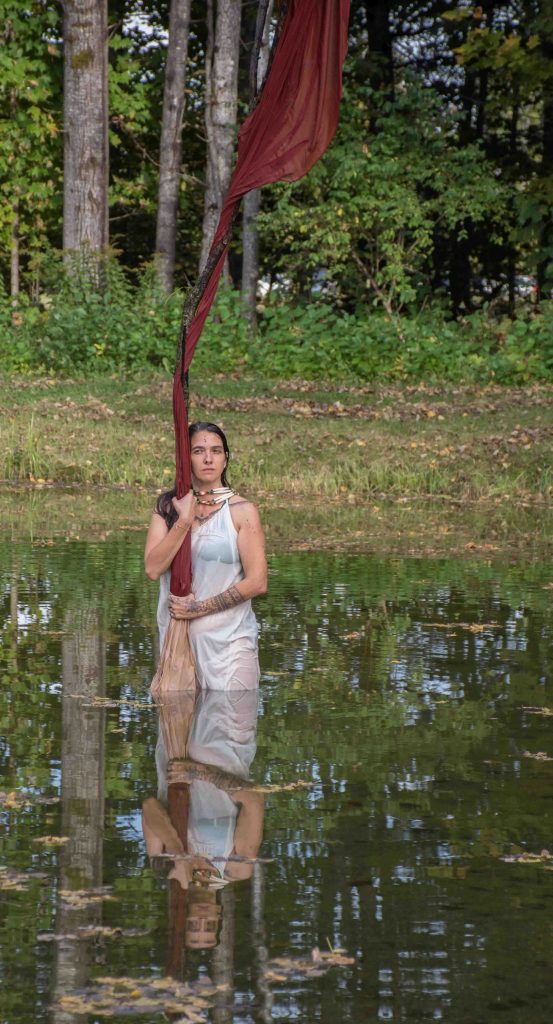
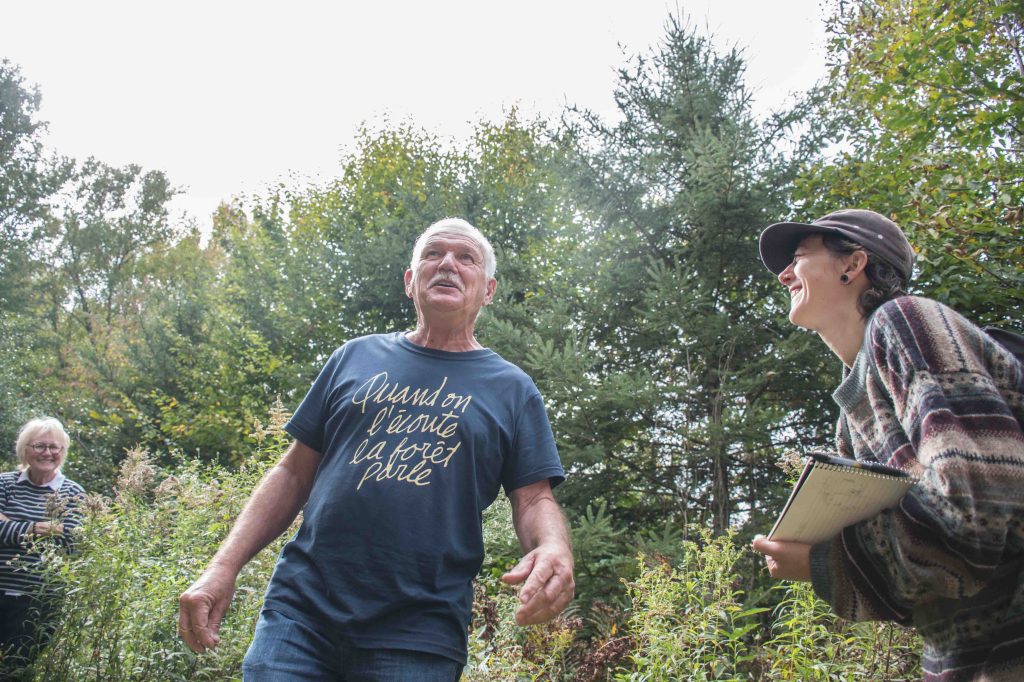
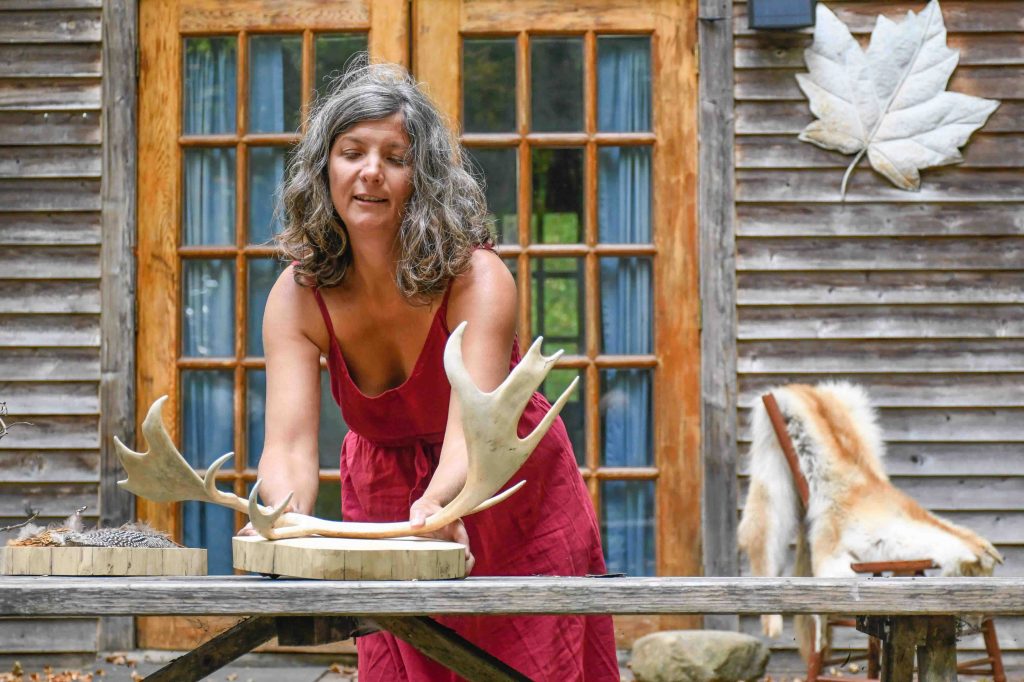
La deuxième édition de l’évènement À TABLE sonde la notion de territorialité en rassemblant différentes pratiques artistiques et agricoles qui (re)pensent nos façons d’entrer en relation avec les territoires, à la fois en surface, en profondeur et en hauteur. Les artistes et intervenant·es invité·es à faire territoire partagent une volonté de décentrer les humain·es de l’histoire et du territoire, de décoloniser les espaces et les savoirs tout en adoptant une multitude de points de vue sur le monde. Leurs intérêts se situent aux croisements de différents modes d’occupation et d’utilisation du territoire propres aux humain·es et au autres-qu’humain·es. Les interventions artistiques qui ponctuent la programmation portent notre attention sur l’interrelation entre les règnes végétaux, animaux et minéraux, sur des phénomènes météorologiques, sur des traditions ancestrales ainsi que sur des pratiques contemporaines qui brouillent les frontières entre nature et culture.
Au-delà d’une dimension géographique, terrestre, nous avons « fait territoire » avec l’eau, le ciel et les relations que nous entretenons en ces lieux que nous habitons et qui, inversement, nous habitent.
Nous l’avons défait, aussi, ce territoire qui ne peut être contenu sur une carte, confiné par des frontières.
Nous avons fait territoire commun, habité, vivant, en mouvement, ensemble.
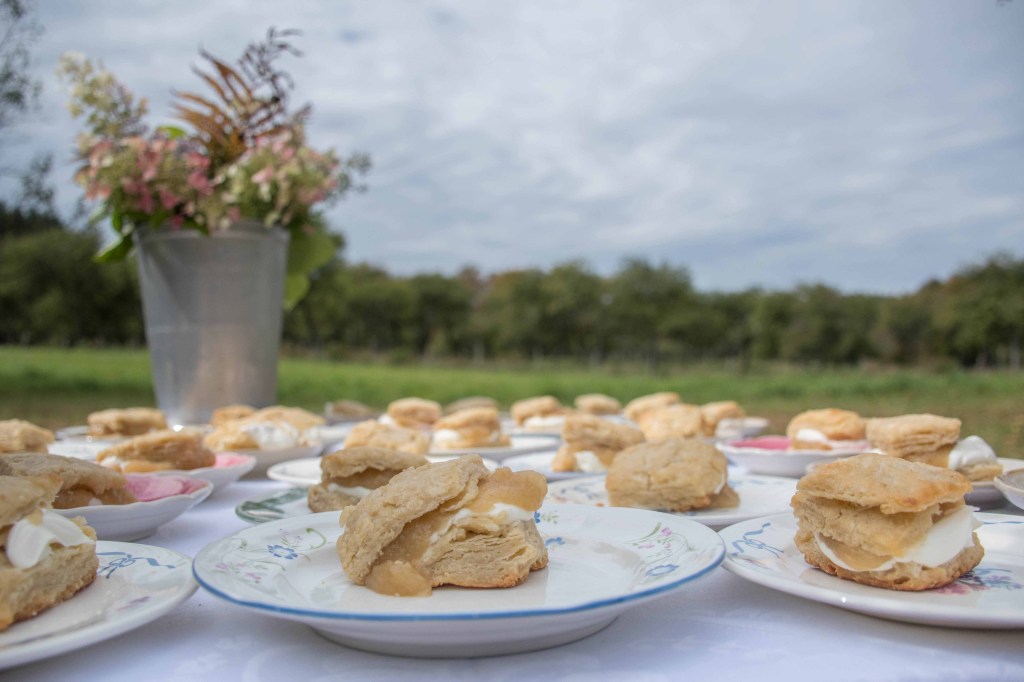
Conceived as the central feature of RURART’s annual programming, the À TABLE series of events combines research, diffusion and cultural mediation on topics relating to art, ecology and agriculture. Held outdoors, in the farm’s facilities, they take the form of a large table where speakers from the artistic, agricultural and research communities gather around a common theme. The sharing of ideas is complemented by farming and creative workshops, artistic installations and performances, and a seasonal meal featuring local farm produce.
The second edition of the À TABLE event probes the notion of territoriality by bringing together a variety of artistic and agricultural practices that (re)think our ways of relating to territories, on the surface, in depth and up high. The artists and contributors invited to faire territoire share a desire to decentralize human beings from history and territory, to decolonize spaces and knowledge while adopting a multitude of viewpoints on the world. Their interests lie at the crossroads of different modes of occupation and use of the territory, both human and other-than-human. The artistic interventions that punctuate the program focus our attention on the interrelation between the plant, animal and mineral kingdoms, on meteorological phenomena, on ancestral traditions and on contemporary practices that blur the boundaries between nature and culture.
Beyond a geographical, terrestrial dimension, we have “made territory” with water, sky and the relationships we maintain in these places we inhabit and which, reciprocally, inhabit us.
We have also unmade this territory, which cannot be contained on a map or confined within borders.
We have created a shared territory, inhabited, alive, in movement, together.

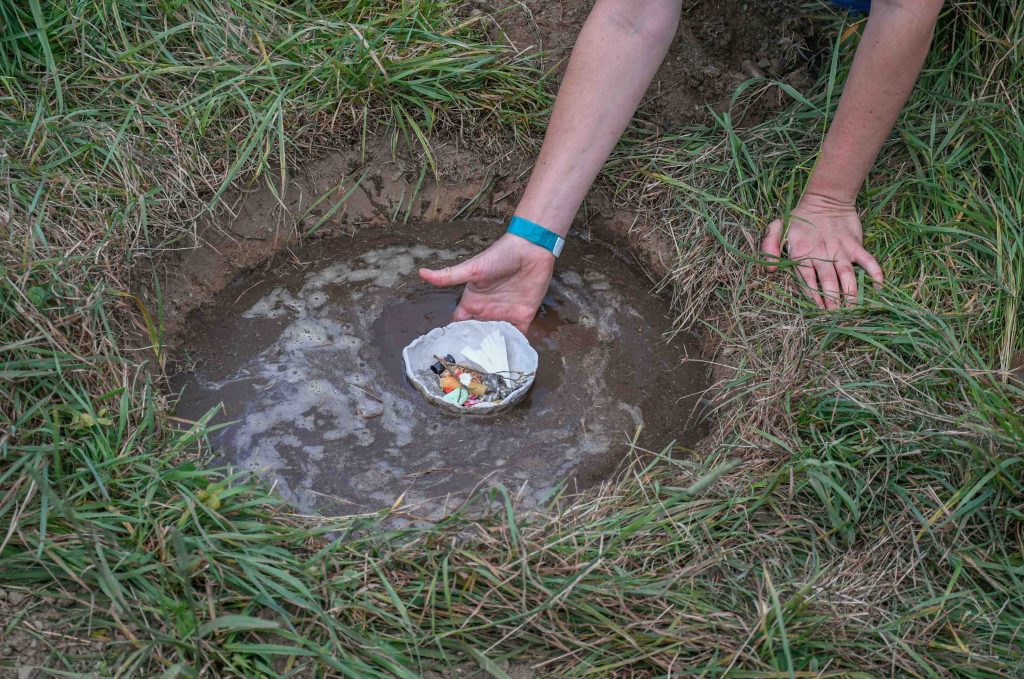
Photos : Jessica Renaud
 noémie fortin